52 for 52 - A radio challenge

Beginnings

In September, I got a ham radio license and decided to get my general ticket and start operating on HF. While I was working toward my license upgrade, I decided to set myself a challenge to help me become a better operator. I decided I needed an ambitious goal to help to maximize the gains and keep me working hard. I decided I wanted to make contacts each and every day, but that's a pretty ambitious goal, and I am uncertain if I will be able to maintain it. So instead, I decided to make contacts each week. This then created the question of how many? Just one contact isn't quite challenging enough, so how about 52? That's enough to make me have to work hard to get there. It is also enough that I can't just fire up the radio, make a quick contact, and then go back to bed. I want to force myself to become active; I want to get practice operating and setting up my equipment. I don't think I will be able to get 52 contacts in a single day, so I will have to remain active for multiple days each week to meet the goal.

The Rules

  1. Make 52 contacts each week for the entire year
  2. Use any mode or band you feel like, as long as it is a licensed amateur band (FRS & GMRS don't count, but HF, VHF, UHF, and even licensed Meshtastic do).
  3. Keep a log with standard QSO information, UTC date/time, signal sent, signal received, band, and mode
  4. Date is based on UTC time
  5. Weeks are based on ISO-8601, but only contacts on days in 2026 count toward the total.
  6. Contacts made during a contest, POTA activation, SOTA activation, or similar count as long as your callsign was used. Any contacts attributed to a club callsign do not count toward the totals, unless the operator's callsign was also exchanged or could be identified through a serial number or similar.
  7. That's it.

Tracking

To keep track of the contacts I make each day, I plan on using a simple chart. I will just record a total here. I don't think I will have too much difficulty hitting these numbers, especially if I can do one or two POTA activations per week.

Data Phone Total
Contacts this Week
Previous Weeks
Total

I will add new columns as necessary, but this is what I will start with.
Consew 166R - A Review of Sorts

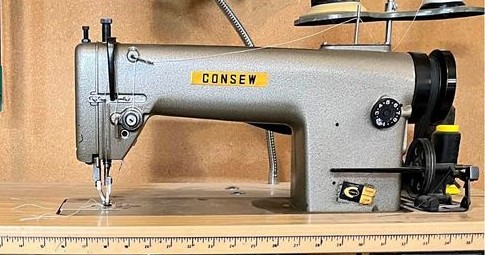
Consew 166R Sewing Machine

Our newest acquisition is a Consew 166R. I found this listed on Facebook Marketplace, we were looking for a "spare" machine in case our main Singer XXX machines go down or if we want to set this machine up for Leather or Denim/Canvas. The person we bought it from was using it to sew leather. They had just recently upgraded to a new machine and were no longer needing this one.

I couldn't find much information about this machine online, so I figured we should make a simple review to help others who might be looking at it. I also cleaned up the manual that was with the machine and will make that available for others who might need a copy.

The TL;DR

Instead of the usual review where I go over all of the details eventually getting to the point, let's just get down to it.

Overall Rating 12/20 - This machine is a good buy if you can find it for around $500 - $700 and ensure it sews the material you will be sewing. It can sew a wide range of materials, strong enough to sew leather but still fast and versatile enough to sew lighter-weight materials like cotton or denim. While not well suited to veg tan leather, it should be able to sew relatively light and soft leathers in products like bags or garments, but not well suited to sewing veg tan or other incompressible materials. If you are looking at something much above $700, you would be much better served with a Juki/JIN NA-11, currently for around $1000 - $1200. Additionally, in this price range, you will find more options at industrial sewing machine suppliers, who should also be able to service the machine if you have trouble.

Faux Fur - 5/5 Sews up to 4 layers of 2" pile faux fur in a simulated sandwich. The first two layers are sewn, and then two more layers are added, creating a sandwich and simulating sewing something like a plushie.

Cotton/Denim - 5/5 Sews up to 15 Layers of Denim with adjustable pressure for both the presser foot and walking foot. I can sew a wide range of materials with minimal adjustment, from weight quilting cotton to thick fabrics like denim and canvas. I could sew over 24 layers of quilting-weight fabric (I gave up counting at 24 layers; I can't imagine I would ever need to sew more than 24 together.)

Leather - 1/5 With this machine, I can sew around four layers of 3/4 oz chap split leather or other soft/compressible leather. However, it is not well suited to sewing "stiffer" leathers like vegetable tan leather. If the sandwich you are sewing is too thick, the upper tension assembly will disengage and not sew properly. I could only successfully sew the equivalent of one layer of 6/7 oz veg tan leather and maintain proper tension (greater detail below on leather.)

Resources - 1/5 I was fortunate to get a machine with an operator's manual since only a few resources are available online. The lack of resources is partly why I am writing this review to help others looking at the same machines. Consew makes a parts manual available on its site, which helps see the specific assembly order. Looking for parts using the part numbers on the parts list doesn't yield any results. I don't know if Consew has them available, but I don't think I it will be likely that I will need repair parts so I am not too concerned.

Specs

Needle Type 135X17 (DPX17)
Motor Size
Presser Foot Lift Height (Lever)  Approximately XX
Presser Foot Lift Height (Knee Bar)  Approximately XX
Non-oil Bath Oiling System
Walking Foot
 External Table Mount Bobbin Winder
Standard Clutch Motor (Can be upgraded with aftermarket servo)

Results

Leather

Leather is out of this machine's comfort zone. If sewing leather is your primary goal, this machine may not be the best choice. It is possible to adjust the machine to sew thicker vegetable tan materials, most likely into the 12 oz range, but you won't be able to sew thinner materials easily.

Chrome Tan Chap Split Four layers of 3/4 oz Sews, no problem.
Veg Tan Leather  About 6-7 oz max (Maybe 1/8" or 3mm) Veg tan doesn't compress, and much over the 6-7 oz doesn't compress enough for the upper tension to engage correctly. You can adjust to sew around 6-12 oz, but if you do this, you won't be able to sew 0-6 oz thickness without additional adjustment.
Veg Tan & Chrome Tan Sandwich

Cotton/Denim/Canvas

Denim/Canvas 15 layers Sews these types of materials with no problem.
Quilting weight cotton Over 24 layers When sewing only a few layers, you need to ensure the material isn't sucked into the feed dogs.

Faux Fur

2" Pile Faux Fur Four layers
Cover Image

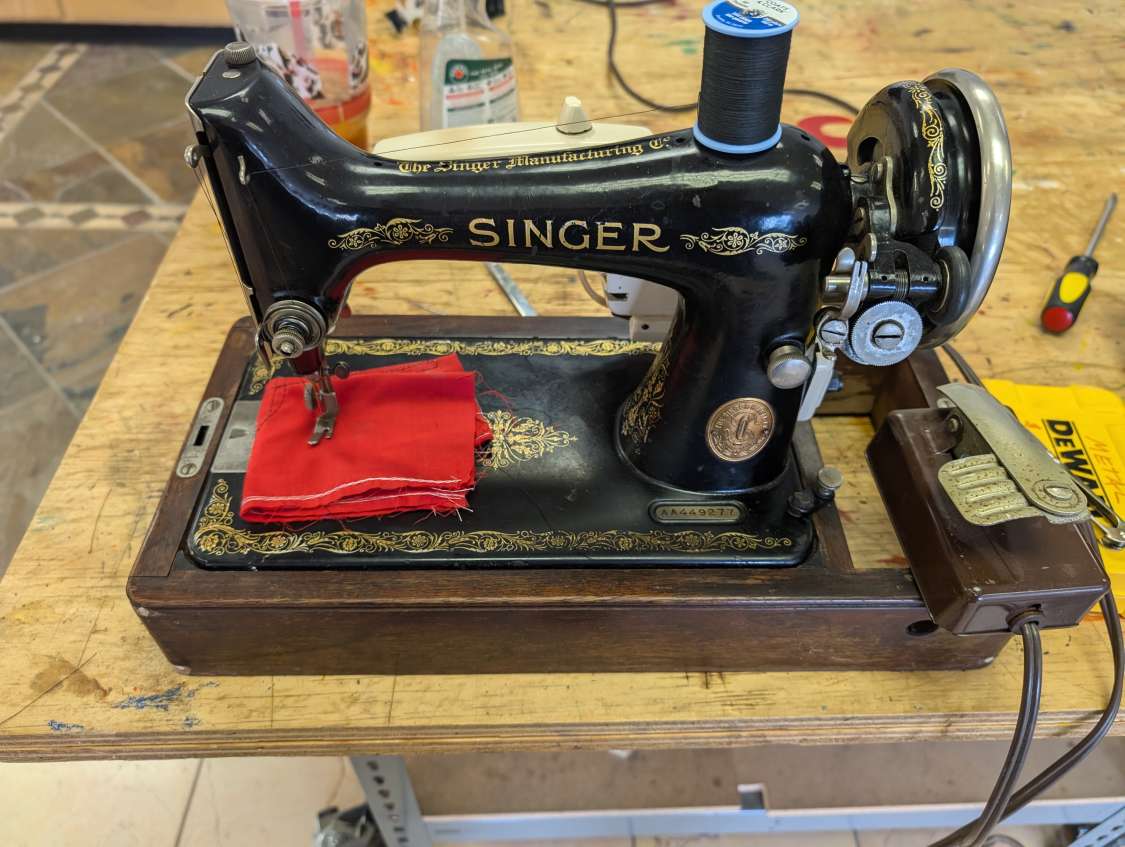
Singer 99 - Part 1

I have started acquiring and rehabbing vintage sewing machines in the past year or so. It began with my Singer 15-91 and has continued. I have enjoyed the vintage machines, especially the one I converted to hand crank.

Periodically, I search Facebook Marketplace, Craigslist, and thrift stores. At the beginning of September, I found the following listing on Facebook Marketplace: Marta decided I needed a special prize for my birthday, so we set out to Casper to pick up another machine (A Singer 66 treadle machine I will talk about later). Based on the photos, I thought it was a 99-13 since it has a knee lever hole at the bottom of the case. I am not fond of knee-operated machines, but I am willing to try them. (Also, I saw that the listing said no foot pedal, but I assumed it was still inside the top of the case since that is a location people don't always think to look in.

Read more

Stitched with Love: My First Completed Quilt

Embarking on a journey into the world of quilting was initially overwhelming. Still, I decided I needed to challenge myself, and I wanted to create an item to show my appreciation to Marta, so I stuck with it. In the previous chapter of this quilting saga, I shared my connection to the craft through my mother's founding of a local quilt guild. I'm delighted to recount the exhilarating experience of completing my first quilt.

Read more

Embarking on a Quilting Adventure: From Mom's Guild to My First Block

Nestled within the folds of my childhood memories is the comforting warmth of quilts – vibrant tapestries woven with stories, love, and community. Growing up, my mother, fueled by her passion for quilting, was pivotal in establishing a local quilt guild that became a hub for creativity and camaraderie. The gentle hum of sewing machines, the chatter of like-minded individuals, and the kaleidoscope of fabrics all became a familiar backdrop to my early years.

Read more

Unleashing Creativity: The Essence of Maker Education

In the dynamic landscape of education, a revolutionary approach is gaining momentum and transforming how we learn – Maker Education. At its core, Maker Education is a hands-on, experiential learning method that empowers individuals to become creators, inventors, and problem solvers. This educational philosophy finds its perfect home in makerspaces, vibrant hubs where creativity knows no bounds.

Read more